
Questions to Ask Before Choosing a Tutor
Comprehension Is a Skill, Not a Talent
Most struggling readers are not struggling with the words. They can decode a sentence accurately and still finish a page with no idea what it said. Comprehension is the part of reading that turns print into meaning, and it depends on far more than phonics: it relies on background knowledge, vocabulary, inference and — above all — the habit of actively wondering what a text is doing.
The good news is that comprehension can be taught, at any age. A seven-year-old working out why a storybook character told a lie, a Year 10 student untangling a nineteenth-century paragraph, and an adult returning to study after twenty years away all improve using the same handful of techniques. The trick is to make them regular rather than occasional.
Before You Read: Set a Purpose and Make a Prediction
Comprehension starts before the first sentence. A reader who arrives with a question reads differently from one who simply starts at the top. In tutoring sessions, this is the quickest win available, and it takes about two minutes.
- Non-fiction: ask what the learner already knows about the topic, then have them list two or three things they hope to find out. A headline, subheading or photograph is enough to spark this.
- Fiction: read the title and blurb, then predict. "What might go wrong here?" "Who do you think is telling the truth?"
- Older readers: skim the first and last sentence of each section before reading properly. This builds a mental map that makes the detail easier to fit into place.
Questioning as You Read
Skilled readers question automatically; developing readers need it modelled out loud. Pause at the end of a paragraph and ask, "What has just happened? What does that tell us?" Then let the learner hear you reason through your own answer, including the bits you are unsure about.
It helps to name three levels of question, because learners often stop at the first:
- Right there — the answer sits in one sentence. Useful for checking attention, but not the end goal.
- Read between the lines — the answer needs two or three clues joined together, such as a character's words plus their actions.
- Beyond the text — what do you think, and what in the text makes you think it? This is where the real comprehension work happens.
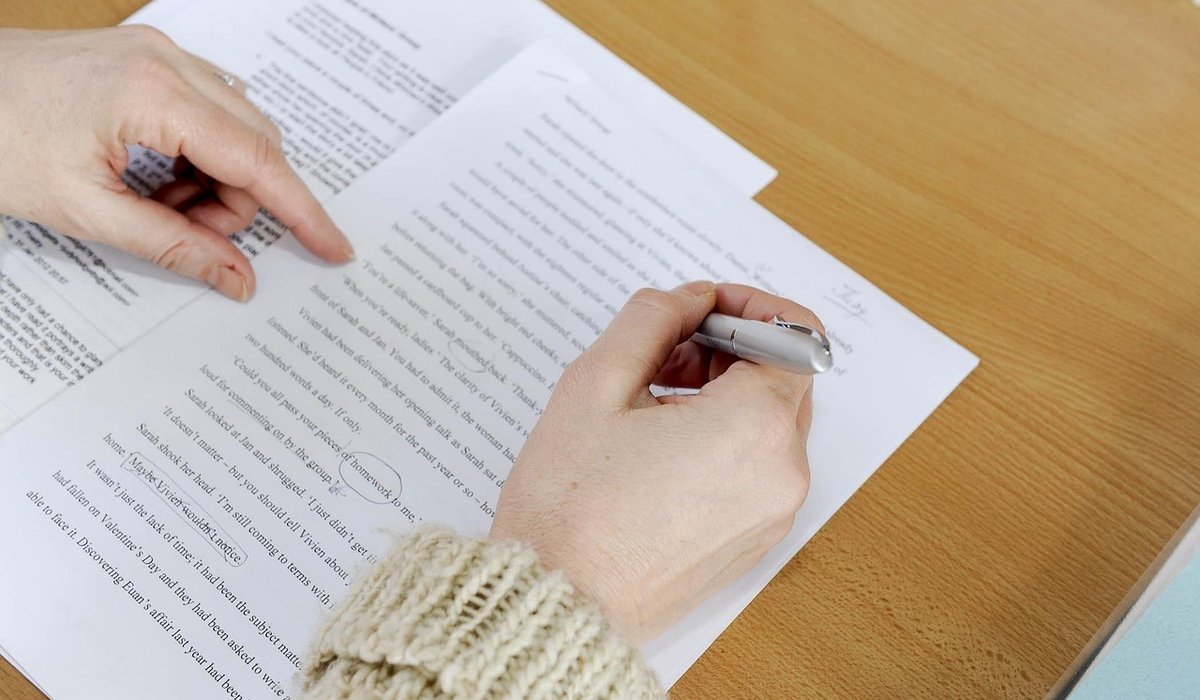
Encourage learners to write their own questions in the margin as they go. A page covered in pencilled question marks is a page that has been read properly.
Summarising: The Shortest Version That Still Makes Sense
Summarising forces a reader to decide what matters, which is precisely the judgement weaker comprehenders avoid. Match the technique to the age and the text:
- Early readers: retell the story in three sentences — beginning, middle and end. Keep it spoken at first.
- Primary: use Somebody Wanted But So Then. Somebody wanted something, but a problem got in the way, so they did something, and then this happened.
- Secondary and adult: write a one-sentence gist for each paragraph, then squeeze the whole piece into twenty words. For non-fiction, identify the claim and the evidence offered for it.
One warning worth repeating: copying out sentences is not summarising. Ask the learner to close the book, say the summary aloud, and only then write it. If they cannot say it, they have not yet understood it.
Talk About It: Discussion Does the Heavy Lifting
Comprehension is repaired in conversation. A tutor or parent asking the right open question gives a learner the space to notice what they missed — far more effectively than marking a worksheet.
- "What made you think that?" Ask for evidence, gently, every time.
- "Was the character right to do that? What would you have done?"
- "Whose side of the story are we not hearing?" — excellent for news articles and persuasive writing.
- "What surprised you, and what do you still not understand?"
Then wait. Ten seconds of silence feels long but is often where the thinking happens. Talk about your own reading too; a learner who sees an adult puzzled by a paragraph and working it out learns that difficulty is normal rather than shameful.
Make It Regular, and Choose the Right Material
Little and often beats long and passive. Fifteen minutes of focused reading with a few questions is worth more than an hour of page-turning. Variety matters as much as volume:
- Mix fiction with non-fiction: news articles, instructions, recipes, letters, reviews, graphic novels and audiobooks alongside print.
- Aim for texts a learner can read with roughly 90–95% accuracy. Harder texts are fine, but scaffold them by reading aloud together or pre-teaching tricky vocabulary.
- Keep a simple log — date, title, one sentence of summary. It shows progress and makes the habit visible.
- Re-read favourites. Familiarity builds fluency, and fluency frees up attention for meaning.
- For exam preparation, practise short timed comprehension passages weekly so the questioning process becomes second nature.
Over time the questions move inward, and the learner stops needing to be asked at all. That is the point at which reading becomes thinking — and it is worth every unhurried fifteen minutes it takes to get there.
LEAVE A COMMENT